I spent the early years of my life in Assam. The Bihu dance, the traditional attire called Mekhela Chador, the language, the food, and the picturesque roads amidst the tea gardens of upper Assam are always close to my heart. Later in life, my work involved traveling to rural and remote locations in India.
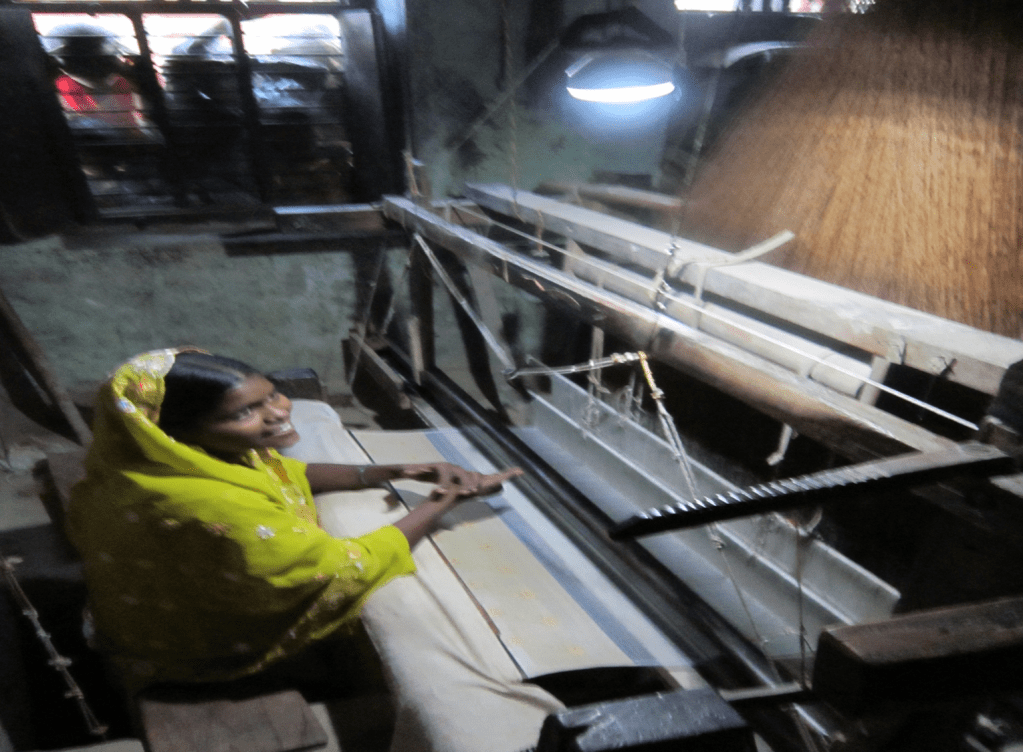
One of my projects in the year 2014-15 included the installation of solar off-grid systems in the handloom clusters of District Azamgarh (Uttar Pradesh). Interactions with the handloom communities provided the opportunity to know about their work and life. During one of my visits, a weaver showed me one woven cloth piece. It looked like Chador of Mekhela Chador. Mekhela Chador is traditionally worn by Assamese women and comprises two pieces of clothes that are draped around. The weaver confirmed it as the Chador of Mekhela Chador. The weaver mentioned that a distributor from Assam placed these orders. Placing such orders in a state outside Assam must have some associated economic reasons.
In the year 2015 or 16, my sister visited an organization that supports rural women through handloom initiatives in Bodoland (Assam). She bought a few handloom kurtas with beautiful local motifs. The kurtas looked fabulous with their ethnic touch. However, these contemporary items have a limited buyer base which is generally the niche market in bigger cities.
Traditional attire of one state is being weaved in villages of another state. And similarly, in the villages of one state, the traditionally woven clothes are modified to suit the broader market. This may be viewed as a cultural exchange percolating to the village level. Such arrangements make the traditional attires more pocket friendly to the buyers. On the other side, handlooms at the village level are contributing to the pool of contemporary and comfortable outfits.
 Life and Living
Leave a comment