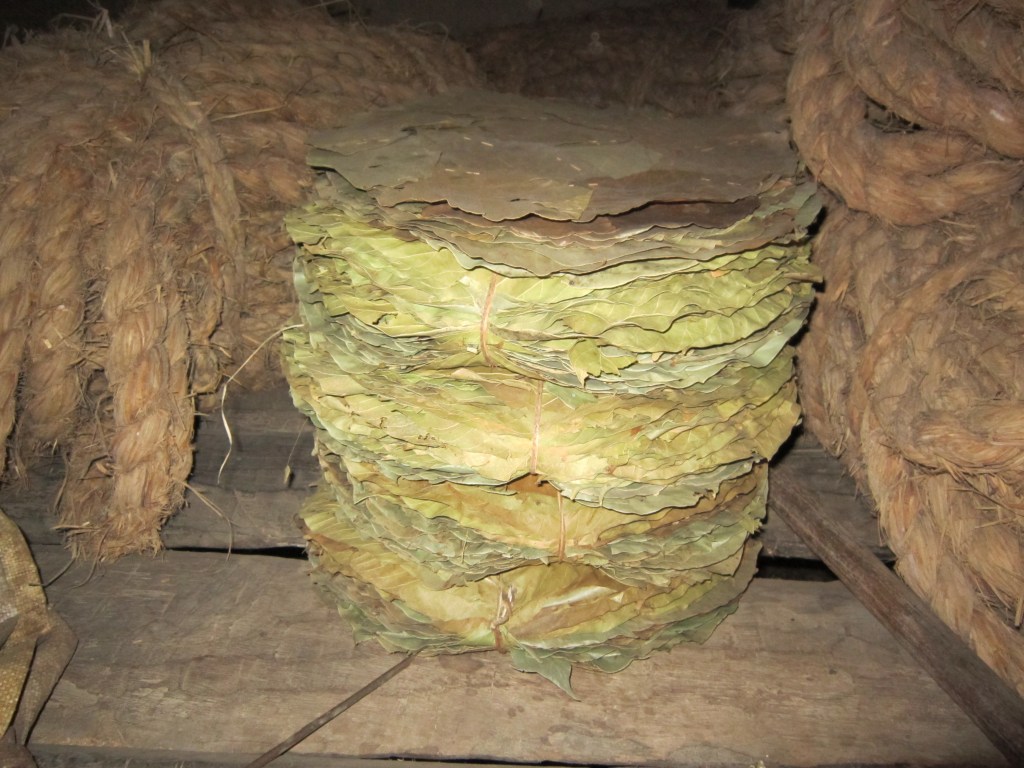
It is around the year 2013 or 14. I went to tribal villages in remote locations of the eastern part of India. A team of surveyors was with us. The area was un-electrified. The village we went to was amidst the forest. The reason for the survey was to understand the livelihood requirements. The primary occupation of the village was making plates out of the Sal leaves (Shorea Robusta) collected from the forest. Sal leaves were sun-dried, pressed under heavy stones, and stitched manually to make plates. The plates were then collected by the wholesalers from these villages.
Somehow, we decided to complete our survey in a day. The surveyors were spread across the villages in teams of two. With me was a girl from the same state, who knew the local language. Around evening time, we both went to one house and by the time we completed our work, it was dark. A person from that house accompanied us to the main village road, which was a narrow road made of mud. The houses were dispersed.
The only light we had was our mobile phone’s light. For a few minutes, I was a bit scared as the area was new, and the fear of leopards and other wild animals was there. And above these I felt responsible for the girl with me. Suddenly, I heard the voice of my coworker. He was carrying a solar lantern, which he rented from the Solar Lantern Vendor of the village. Our institution under its Lighting a Billion Lives (LaBL) Programme established small entrepreneurs in unelectrified villages which rented charged solar lanterns at the cost of INR 2 per day. That day, at the sight of the light I felt very relieved and realized the importance of quality light in the evening hours.
These small initiatives such as solar lanterns make a difference in life, not only by providing quality light but also by providing a sense of security. Many times, these changes may not be visible in monetary terms. Now, in India, the majority of the villages are electrified.
Later, a solar operated multiutility centre was established in the village based on the survey, which provided electricity and equipment to prepare the Sal leaves plates.
(Views are Personal.)
 Life and Living
Leave a comment