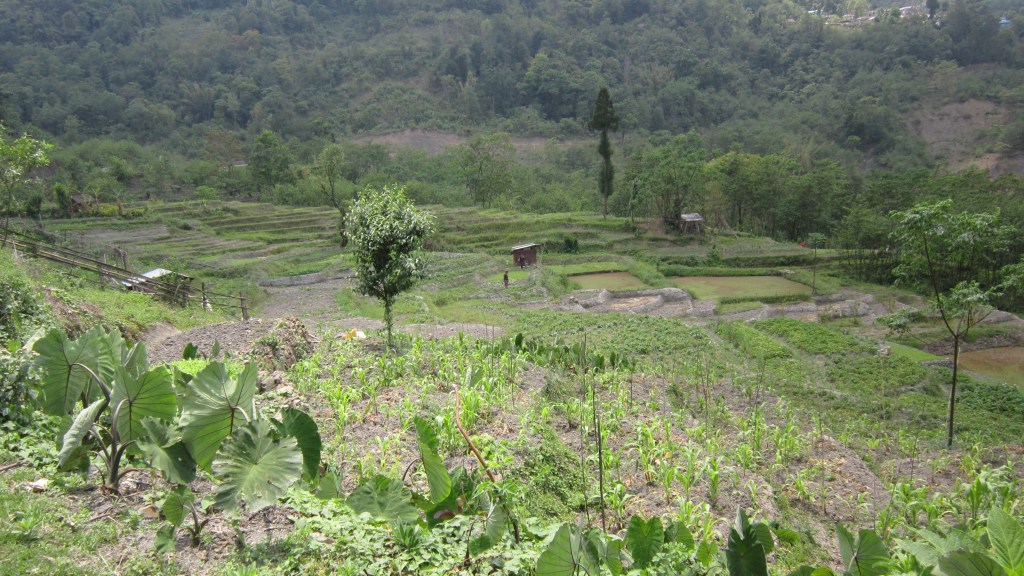
Jhum Cultivation, also sometimes referred to as shifting cultivation, is an agricultural practice. This practice is followed in the hilly terrains, mostly in the north-eastern part of India. In Jhum Cultivation, the village governing body allots a patch of land to a household. This land is on a nearby hill. The farmer cleans the forest in the allotted land by cutting (and storing it for firewood purposes) and burning. The ashes are used as the manure. The farmer’s family prepares the land by tilling it. Seeds are sown. Staple food like rice is generally grown. Additionally, fruits, vegetables, and pulses are also cultivated in the Jhum land. The rains are the source of water in Jhum cultivation. The crops are harvested. Cultivation is practiced in the same patch of land, in general, for one to three years. After the harvest or the cultivation tenure, the land is left fallow. The land is left fallow for many years, mostly eight or more years. The farmer is allotted a different patch of land after the cultivation tenure.
Jhum Cultivation in Nagaland (Photo Credit: Author)
Jhum Cultivation is an age-old practice. It is practiced in the difficult terrains of hilly and densely forested areas of the north-eastern part of India. There are mentions of Jhum practices from 8000 BC in the Neolithic period. The Jhum Cultivation is part of the ecology, culture, and economy of the north-eastern hills. This method of subsistence farming provided food in this difficult geography and has been a source of livelihood.
Jhum as a system is an integrated approach to establish agroecosystem in the difficult terrains of tropical hill regions that involve forest, soil, biodiversity and livestock management through their culture, tradition and rituals that coevolved with associated ecosystem.”
There are mixed opinions on Jhum Cultivation. One set of opinions relates to soil and forest degradation due to the shifting of land and burning of forests. Another opinion links the shifting of cultivation land with forest regrowth. Time threw challenges to this age-old practice like changing rainfall patterns, subsistence living, and reduced family labour. State governments introduced the concept of permanent farming. The National Sample Survey focusing on Jhum Cultivation households was conducted in the year 1976-77. It reported that most of the sample villages showed a positive attitude towards permanent cultivation.
Jhum Cultivation is an age-old practice. It is imbibed in the ecology, culture, food security, and economy of the north-eastern hills. A paper published in Indian Farming 2019 concludes that Jhum cultivation is ecologically stable. This stability occurs when practiced in low-population-density areas. It is also stable when used for subsistence farming.
 Life and Living
Leave a comment