Electricity consumption worldwide in the year 2023 was 629.4 TWh. The consumption almost doubled to 1080.1 TWh in the year 2024. Sixty percent of this increase in electricity consumption was in the building sector. The main reason for the increased electricity consumption in buildings was the increased usage of air conditioners.
Temperature and electricity consumption are very closely related. 2024 was the warmest year. For the first time, the temperature was more than 1.5 °C above pre-industrial levels. In India, intense heat waves were observed in the months of May and June. This triggered the electricity consumption for cooling in the buildings. The power grids of the country faced the strain. To meet the increasing demand for electricity, more fossil based fuels were used for further electricity generation. This resulted in additional 50 Mt CO2 emissions.
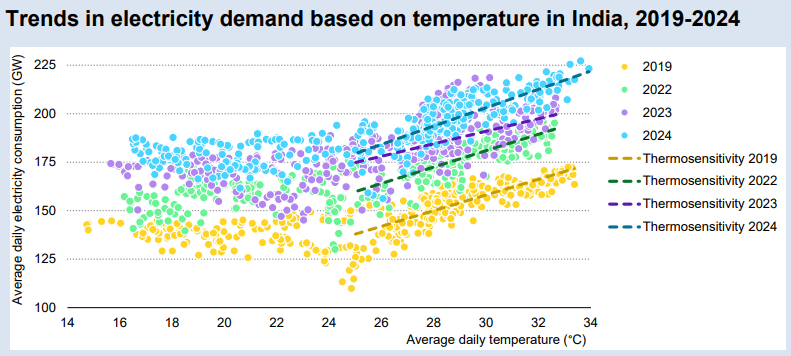
The increasing temperatures lead to increased usage of cooling appliances in buildings. The generations from clean energy sources are limited to plant capacities. The variations in the increased electricity demand are generally met using fossil-based generations. The fossil-based generations result in additional emissions. Thus, a cycle of increasing temperatures and emissions goes on.
There is a balance as well. Worldwide, also in India, there has been deployment of clean energy sources, like solar and wind, for electricity generation. The IEA report mentions that these clean technologies prevent around seven percent of the global CO2 energy-related emissions.
Views are personal. The article is based on the Global Energy Review 2025 by the International Energy Agency (IEA). The report is a global assessment of energy and emissions trend for the year 2024.
 Life and Living
Leave a comment