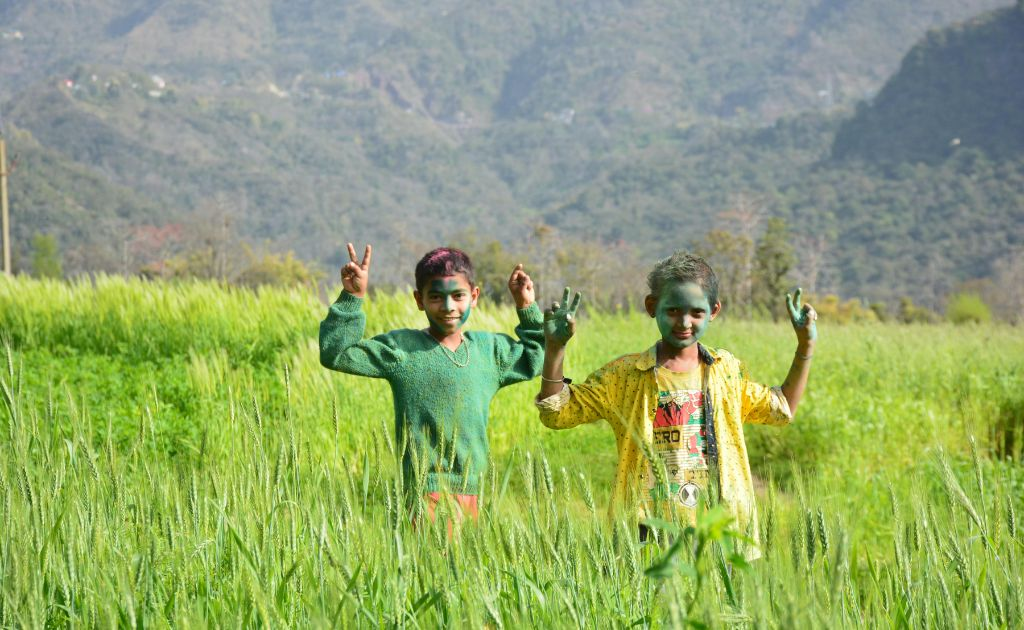
Holi, the festival of colours, is celebrated in most parts of India on a full moon day in March. In general, it is played with colours and water. Mostly, synthetic colours are available in the market. Natural or plant-based colours are also available in few locations. In general, synthetic colours are more affordable and easily accessible.
There are various ways of celebrating Holi. In Vrindavan, it is played blissfully by showering flower petals. In Kanpur, it is celebrated as Ganga Mela. In Shantineketan, the festival is celebrated as a carnival of traditional dance and music. Mythology is linked to the festival. In one belief it is playfulness and in other belief it is about the victory of good over the evil. Along with mythology, the festival also has agricultural significance.
The Indian Meteorological Department (IMD) designates four official seasons in India. Winter spans from December to early April. Summer or pre-monsoon occurs from April to June. The Rabi crops, or the winter crops, are sown from October to December. They are harvested during the summer or pre-monsoon season – April to June. Wheat, Mustard, Pea, Gram, and Barley are the major Rabi Crops in Northern India. The festival Holi coincides with the harvesting time of the Rabi Crops. The festival celebrated with colours and water has a deeper significance. It is also a joyous celebration of the hard work and the expectations of a colourful harvest. In 17th-century literature, Holi is primarily linked to agriculture to express the hope that the land will stay fertile.
The different colours, different reasons, and different ways of celebrating Holi has one essence – the joyous celebration. The festivals are also the time to ponder why we celebrate the festival. Holi has various reasons for celebration and various ways of celebration. Among various reasons, one reason to celebrate is the onset of harvesting season.
(Views are personal.)

 Life and Living
Leave a reply to Monica Banerjee Cancel reply