The city of Chandannagar is located in the bank of River Hooghly in West Bengal. Chandannagar was colony of French Power from 1673 to 1950. Formerly it was known as Chandernagor and Chandannagore. The place held a prominent position in the European commerce. The city of Chandannagar is lesser known than its counterpart – the city of Calcutta – which was a colony of British Power.
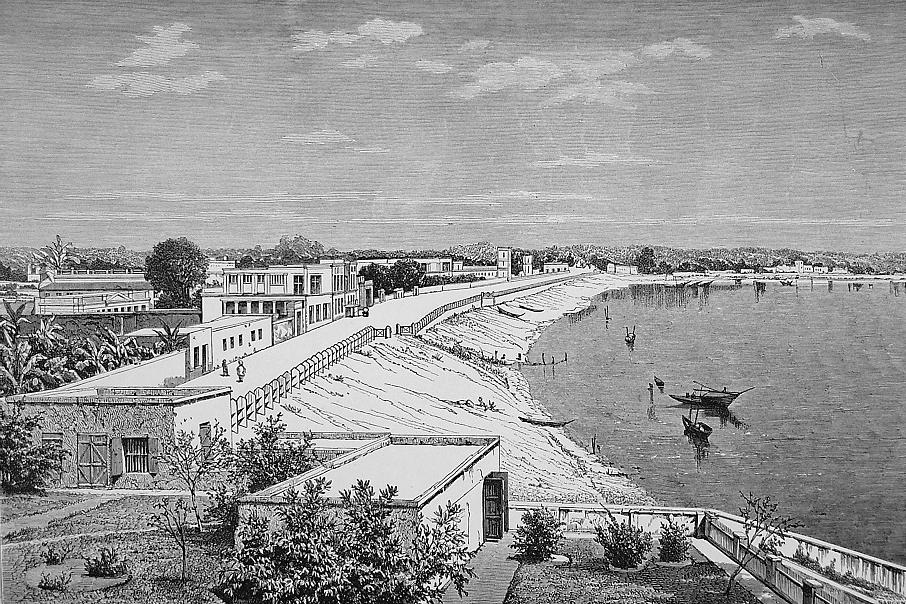
In 1673, the French East India Company obtained permission from the then Nawbab of Bengal for establishing a trading post. The Company obtained the legal ownership of the area in 1688. This area comprised three villages – Borkishonpur, Khalisani, and Gondalpara. The British Navy captured Chandannagar in 1757. The power was restored to French administration in 1763. The area was recaptured by British in 1794 and again restored to French in 1816. It was governed as part of French India until 1950, administered by the Governor General in Pondicherry (now Puducherry). Chandannagar merged with the state of West Bengal through the Chandernagore (Merger) Act,1954.
There was little interference or influence of the French on the then-existing culture and education system of Chandannagar. The folk culture flourished in the area. The popular folk styles were —kobi-gan (Poetic contests), kathakata (recitals from mythologies), panchali (devotional singing) and jatra (folk theatre). The trade escalated the economy of Chandannagar. Although the area was under French power, the railway station of Chandannagar remained under British influence. As the area was under French power, it provided shelter to those avoiding punishments and threats under British administration in Calcutta (now Kolkata) .
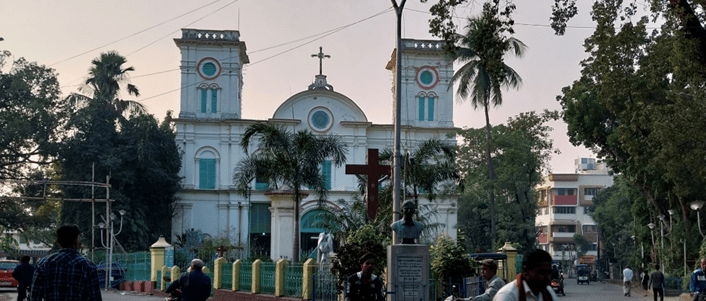
Today’s Chandannagar retains the essence of French presence in old buildings. The French governor’s mansion is converted into the Institut De Chandernagor. The museum exhibits old magazines and newspapers. The history of the area is displayed through models. The Institut De Chandernagor also displays the pieces of furniture and crockery used by the French in those days. The church established in 1691 is a witness of the time in the area.
There are places holding deep and strong history which are lesser known or awaits unveiling. Chandannagar is one among them.
(Views are Personal.)
References:
Banerjee, S. (2012). A Tale of Two Cities Under Colonial Rule: Chandernagore and Calcutta. Occasional Publication 39, IIC.
Chandernagor Municipal Corporation. (n.d.). History of CMC. Retrieved from Chandernagor Municipal Corporation: https://chandernagoremunicipalcorporation.in/About?id=About%20Us-History%20Of%20CMC


 Life and Living
Leave a reply to Manjushree Banerjee Cancel reply